A sewage backup is one of the most hazardous emergencies a homeowner can experience — raw wastewater carries bacteria, viruses, and parasites that put your family's health at risk with every minute it sits untreated. Gateway Restoration's IICRC-trained crews respond fast to contain, remove, and sanitize contaminated black water. Call (480) 591-8997 now for immediate dispatch.
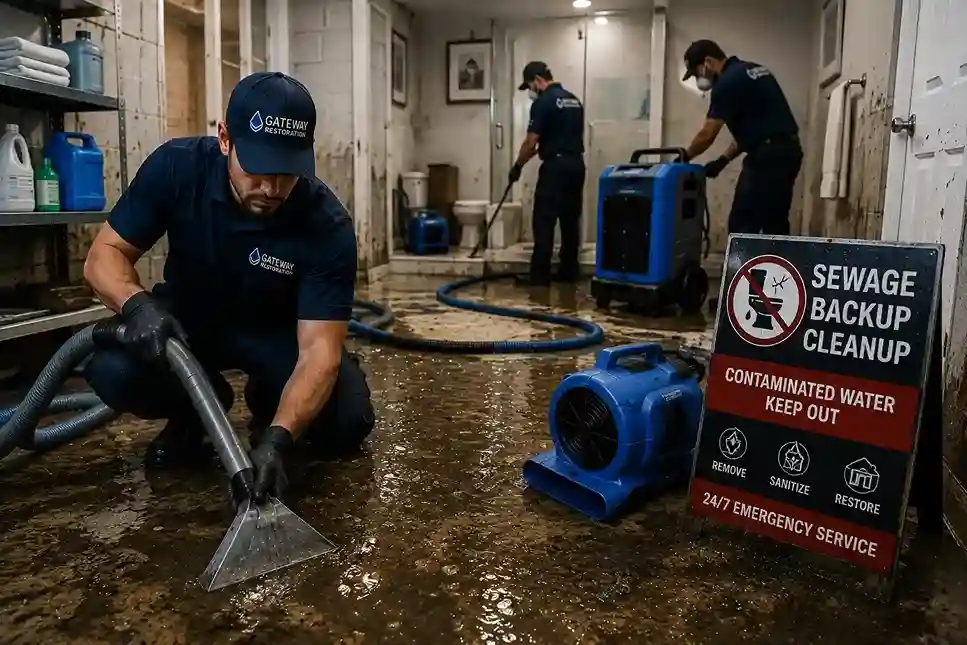
Sewage backups rarely happen without warning — they're usually the result of a blockage, a failure point in aging infrastructure, or a system that's been pushed past its capacity. Understanding what triggers a backup helps homeowners recognize the warning signs before wastewater ends up on the floor.
Mature landscaping in older Chandler neighborhoods sends roots searching for moisture, and they frequently find it inside cracked sewer laterals, slowly choking the line until it backs up.
Clay and older PVC sewer connections in Chandler's established subdivisions can shift, crack, or collapse over decades, restricting flow and causing wastewater to reverse direction.
Flushed wipes, grease poured down drains, and everyday buildup narrow pipes over time until a single clog is enough to send waste backward into tubs, showers, and floor drains.
Soil movement and age can cause a section of sewer pipe to fully collapse, creating a complete blockage that has nowhere to go except back up into the home.
When the city's main line reaches capacity during heavy demand or storm infiltration, pressure can push wastewater back through residential connections into the lowest fixtures in the home.
Intense summer storms send stormwater into aging sewer infrastructure faster than it can move, overwhelming the system and triggering backups in homes with older connections.
Chandler's sewer infrastructure spans decades of development, and older neighborhoods often carry connections that were never designed for today's household demand. Homes with mature landscaping sit closest to root-intrusion risk, while properties near low-lying grading can see rapid stormwater surges overwhelm drainage during monsoon season. We respond to sewage backups throughout Downtown Chandler, Sun Lakes, Ocotillo, Cooper Commons, Clemente Ranch, and Fox Crossing — and we've seen firsthand how each area's soil, age of construction, and sewer connection type shapes the risk.
Raw sewage is not simply dirty water — it's a biological hazard. Every gallon of wastewater that enters a home carries a mix of organisms and contaminants that pose a real threat to anyone who comes into contact with it.
Because of these risks, sewage cleanup is not a job for household cleaning products and a mop. Category 3 water is considered grossly contaminated under industry standards, and effective remediation often requires removing porous building materials that have absorbed contaminated water, along with extensive sanitation procedures that go far beyond surface cleaning. Attempting to handle a sewage backup without the right protective equipment and containment protocols can spread contamination to unaffected rooms and put your household's health at greater risk.
Every water damage restoration job starts with classification, and under IICRC S500 standards, sewage is always treated as the most severe category of water intrusion.
| Category | Also Known As | Contamination Level | Typical Sources |
|---|---|---|---|
| Category 1 | Clean Water | No contamination risk | Supply lines, appliance overflow |
| Category 2 | Gray Water | Mild contamination | Washing machine or dishwasher discharge |
| Category 3 | Black Water | Gross contamination | Sewage backups, toilet overflow, sewer line failure |
Category 3 water is defined by gross contamination and the presence of pathogenic organisms capable of causing illness. Regardless of how a sewage loss occurs — a sewer line collapse, a toilet overflow, or a municipal surcharge — the resulting water is always classified as Category 3, because there is no reliable way to determine the exact level of contamination on-site. That classification dictates every step of the cleanup process, from the personal protective equipment technicians wear to which materials must be removed rather than cleaned. This is also why DIY sewage cleanup carries real risk: without lab-grade testing, there's no way to know exactly what pathogens are present, and improper handling can spread contamination into unaffected rooms of the home.
What you do in the first few minutes after discovering a sewage backup can limit exposure and prevent the contamination from spreading further through your home.
If the backup is linked to a running fixture or a supply line you can safely access, shutting it off can help slow the flow of additional wastewater into the home.
Do not walk through, touch, or attempt to clean sewage water without protective equipment. Even brief contact can introduce bacteria and pathogens to skin.
Close doors to the affected area and keep everyone, especially kids and pets, out of the room until our crew arrives and the area is contained.
Running fans can aerosolize contaminated particles and spread them into the surrounding air and adjacent rooms, worsening indoor air quality.
If the backup is near a return vent or ductwork, shutting down the HVAC system prevents contaminated air from circulating throughout the house.
If it's safe to do so from a distance, take photos or video of the affected area for insurance purposes before cleanup begins.
Call (480) 591-8997 for emergency dispatch. The sooner containment and extraction begin, the less contamination spreads.
Delaying sewage cleanup allows contaminated water to soak deeper into flooring, subfloor, and drywall, giving bacteria and mold more time to establish themselves. What starts as a contained bathroom backup can turn into a multi-room contamination issue within hours if left untreated, which is why fast professional response matters as much for your budget as it does for your family's health.
Every sewage cleanup job follows a structured, IICRC-informed process designed to protect your family's health while restoring your home as efficiently as possible.
Our technicians identify the source of the backup, assess the extent of contamination, and determine which areas of the home are affected before any work begins.
We isolate the affected area with containment barriers to stop contaminated water and airborne particles from spreading to unaffected parts of the home.
Using professional extraction equipment and full PPE, our crew removes standing black water quickly and safely, minimizing further absorption into building materials.
Porous materials that have absorbed contaminated water — including carpet, carpet padding, drywall, insulation, and upholstered furniture — are removed and properly disposed of, since they cannot be reliably sanitized.
Remaining surfaces are cleaned with hospital-grade disinfectants and antimicrobial treatments to eliminate bacteria, viruses, and odor-causing organisms.
Commercial air movers and dehumidifiers dry framing, subfloor, and remaining materials to prevent secondary damage and mold growth.
We track drying progress with moisture meters and thermal imaging, confirming the structure is fully dry before moving on to rebuild.
Once the space is dry and sanitized, we replace drywall, flooring, insulation, and finishes to return your home to its pre-loss condition.
One of the first questions homeowners ask is what will actually need to be replaced. The answer depends largely on whether a material is porous.
Porous materials absorb contaminated water into their structure, giving bacteria and pathogens a place to remain even after the surface is cleaned. Because there's no reliable way to fully sanitize the inside of a piece of drywall or a section of carpet padding, industry standards call for removal and disposal rather than attempted cleaning. Non-porous materials like tile, concrete, and metal can typically be cleaned and disinfected effectively, and hardwood flooring is evaluated individually based on how long it was exposed and how much moisture penetrated the finish.
Between July and September, Chandler's monsoon season brings a distinct set of pressures on local sewer infrastructure that homeowners in drier months rarely think about.
Intense monsoon storms can drop a significant amount of rainfall in a very short window, and Chandler's caliche soil — a dense, cement-like layer beneath the topsoil — doesn't absorb water quickly. That means stormwater has nowhere to go but toward the surface and into drainage systems that are already working near capacity. When storm drains and municipal sewer lines take on more water than they're designed to handle, the result is storm drain overload and added pressure throughout the connected system.
This pressure can push wastewater backward through residential sewer laterals in a process known as surface water infiltration, especially in older neighborhoods where connections weren't built with modern stormwater volumes in mind. Flash flooding during a monsoon cell can also overwhelm grading around a home in minutes, and the rapid runoff typical of Arizona's hard-packed desert soil means backups can happen fast, with little warning before wastewater appears indoors.
If your home is in an older section of Chandler, sits at a lower point in the neighborhood's grading, or has experienced sewer issues before, monsoon season is the time to be most alert to slow drains, gurgling toilets, or unusual odors — early warning signs that the sewer system is under strain.
Sewage cleanup costs more than standard water damage restoration because of the additional health and safety requirements involved. Here are realistic ranges based on the extent of contamination.
| Backup Severity | Typical Cost Range |
|---|---|
| Small bathroom backup | $4,500 – $6,500 |
| Multi-room contamination | $6,500 – $12,000 |
| Extensive contamination | $12,000 – $25,000+ |
PPE requirements for every technician on-site
Containment to prevent cross-contamination
Material removal of porous, unsalvageable items
Sanitization with hospital-grade disinfectants
Biohazard handling and proper disposal
Drying equipment to prevent secondary mold damage
Actual costs vary based on how much square footage is affected, how long the water sat before cleanup began, and which materials require removal. Call for a free, itemized inspection and estimate.
Coverage for sewage backups depends heavily on your specific policy and the circumstances of the loss.
Because coverage often hinges on whether a sewer backup endorsement was in place and whether the loss was sudden rather than the result of neglect, documentation is critical to a smooth claim. We support your claim with detailed moisture readings, before-and-after photos, and daily drying logs, and we communicate directly with your adjuster to make sure nothing gets lost in translation. If you're unsure whether your policy includes a sewer backup endorsement, it's worth checking before an emergency happens — we're happy to help you understand what your documentation should look like either way.
We're based right here at 17817 S McQueen Rd, not routing your call through an out-of-state dispatch center. That means faster arrival and a crew that already understands Chandler's sewer infrastructure and soil conditions.
Sewage doesn't wait for business hours, and neither do we. Our crews are available around the clock to contain and begin extraction the moment you call.
We don't guess when a space is dry — we verify it with moisture meters and thermal imaging, so drying equipment isn't pulled early and mold doesn't get a second chance to take hold.
From documenting the loss to communicating directly with your adjuster, we handle the paperwork side of a sewage claim so you can focus on your family.
Every job includes photos, moisture logs, and a clear record of what was removed and why — the kind of documentation adjusters expect to see on a Category 3 claim.
From a single-bathroom toilet overflow near Clemente Ranch to multi-room sewer line failures in older Chandler neighborhoods, we've handled the range of sewage emergencies homeowners actually face.
Emergency sewage backup cleanup across Chandler and the surrounding East Valley.
A sewage backup happens when wastewater from toilets, drains, or the municipal sewer line reverses direction and enters a home instead of flowing away from it. It can come from a clogged or collapsed sewer lateral, a municipal line surcharge, or a toilet or drain that overflows with waste-contaminated water.
Yes. Under IICRC S500 standards, any water that has been in contact with sewage is automatically classified as Category 3, or grossly contaminated water, regardless of how the backup started or how clear the water appears.
DIY sewage cleanup is not recommended. Raw sewage carries bacteria, viruses, and parasites that require personal protective equipment, professional-grade disinfectants, and proper disposal procedures to safely remove without spreading contamination to unaffected areas of the home.
Sewage cleanup should begin as soon as possible, ideally within a few hours of discovery. The longer contaminated water sits, the deeper it soaks into flooring, drywall, and subfloor, increasing both the health risk and the amount of material that must be removed.
Many homeowners policies cover sewage backup cleanup if the homeowner carries a sewer backup endorsement, and sudden municipal line failures are often covered as well. Damage tied to long-term neglect of a known sewer issue is typically excluded, so documentation matters.
Costs generally range from about $4,500 for a small, contained bathroom backup to $25,000 or more for extensive multi-room contamination, depending on how much material must be removed, how large an area is affected, and how long the water sat before cleanup began.
Porous materials that absorb contaminated water, such as carpet, carpet padding, drywall, insulation, and particleboard, generally cannot be sanitized and must be removed and discarded. Non-porous materials like tile, concrete, and metal can often be cleaned and kept.
A small, contained sewage backup can often be cleaned, sanitized, and dried within three to five days. Larger losses involving multiple rooms or extensive material removal can take a week or longer before the structure is fully dry and ready for rebuild.
Yes. Sewage backups leave behind both moisture and organic material, which creates ideal conditions for mold growth, often within 24 to 48 hours in Arizona's warm indoor environments. Thorough drying and sanitization are essential to prevent it.
Keep children and pets away from the affected area, avoid any contact with the contaminated water, do not run fans that could spread airborne contaminants, and turn off the HVAC system if the backup is near a return vent. Document the damage with photos if it is safe to do so.
17817 S McQueen Rd, Chandler, AZ 85286
Every minute counts once wastewater is in your home. Our crews are standing by 24/7 to contain the hazard, remove contaminated water, and start the sanitization process — call now or request a free inspection.
 Gateway Restoration