Black mold refers to Stachybotrys chartarum, a specific mold species that thrives on damp, cellulose-rich materials like drywall and insulation. Disturbing it without proper containment can release spores into the air and spread contamination throughout your home. Call (480) 591-8997 for a safe, contained inspection before you touch it — Gateway Restoration responds 24/7 across Chandler and the East Valley.
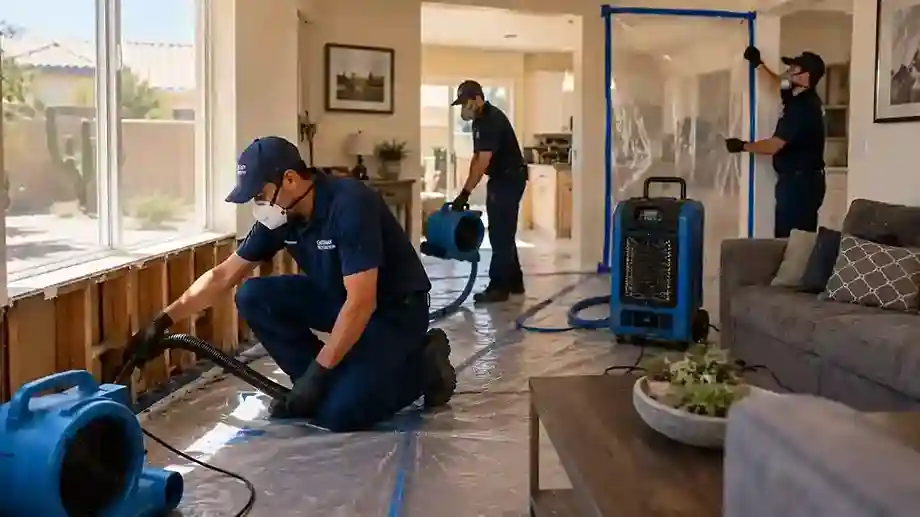
"Black mold" almost always refers to Stachybotrys chartarum, a greenish-black mold species that grows on materials with high cellulose content, such as drywall paper, wood, insulation backing, and ceiling tiles. Unlike common surface molds that can appear on almost any damp surface, Stachybotrys requires sustained moisture, meaning it typically signals a water problem that has gone unaddressed for an extended period rather than a brief, minor dampness event.
There's an important distinction homeowners should understand: not every dark-colored mold is black mold. Several common household molds appear dark gray, dark green, or black to the naked eye, but have entirely different growth patterns and characteristics. Visual identification alone is unreliable. The only way to confirm whether a colony is actually Stachybotrys chartarum is through laboratory testing of a physical sample, which is why we treat any suspected black mold with full containment procedures until testing confirms otherwise.
Arizona's dry climate can create a false sense of security, but black mold doesn't need a humid environment outdoors, it needs sustained moisture somewhere indoors, and Chandler homes create that condition more often than people expect.
July through September brings sharp humidity spikes and wind-driven rain that pushes moisture past rooflines, windows, and stucco seams.
Stucco exteriors can trap moisture behind the wall assembly for weeks after intrusion, hidden from view the entire time.
Undetected leaks behind drywall, cabinets, showers, and laundry rooms often go unnoticed until mold has already established.
Continuous summer air conditioning use generates steady condensation, and a clogged drain line can feed mold growth in attics for months.
Homes affected by monsoon flooding, slab leaks, burst pipes, or roof leaks that weren't fully dried are at significantly higher risk.
Because Chandler's air is typically dry, homeowners often don't suspect mold until a musty odor or staining is already noticeable.
Drywall paper is an ideal food source for Stachybotrys once it's been wet, and mold growing behind the surface often isn't visible until it bleeds through paint or joints.
Slab leaks and appliance overflows can trap moisture beneath engineered flooring or carpet padding, creating dark, contained growth that's easy to miss during a casual walkthrough.
Poor ventilation, shower pan leaks, and grout failures make bathrooms one of the most common rooms we find active black mold in Chandler homes.
Condensation inside ductwork and around the evaporator coil can support mold growth that then circulates spores throughout the home every time the system runs.
Roof leaks and condensate line failures often go undiscovered in attics for months, giving mold ample time to establish on rafters, decking, and insulation.
Slow leaks from kitchen and bathroom supply lines saturate cabinet bases and the flooring beneath them, an area rarely inspected until damage is advanced.
Failed window flashing and sealant lets monsoon-driven water behind interior trim and wall cavities, where it can sit undetected against drywall.
Homes affected by flash flooding or storm intrusion that weren't fully dried within 24 to 48 hours are among the highest-risk properties we inspect each summer.
One pattern we see often: many Chandler homeowners discover mold weeks after a water damage event appeared fully resolved on the surface. Carpets dried, walls looked fine, and the incident was considered closed, but moisture trapped deeper in wall cavities or subfloor kept feeding growth out of sight. If a past leak or flood wasn't verified dry with moisture readings, it's worth a follow-up inspection.
Reactions to mold exposure vary significantly from person to person, and it's important to discuss this factually rather than with alarmist claims. Some individuals show no noticeable reaction to mold exposure, while others are considerably more sensitive.
We're not medical professionals, and we don't make diagnostic or medical claims about mold exposure. If anyone in your household is experiencing ongoing symptoms they suspect are related to mold, we recommend speaking with a physician in addition to scheduling a professional inspection of the property.
We use moisture meters and thermal imaging to locate the moisture source feeding the mold and identify the full extent of the affected area before any work begins.
Poly barriers and negative air pressure isolate the work zone, preventing spores from spreading into unaffected rooms during removal.
Air scrubbers run continuously throughout the project, capturing airborne particles down to the microscopic level.
Porous materials that have absorbed mold growth, such as drywall, insulation, carpet padding, and ceiling tiles, are removed and bagged for disposal since they cannot be fully cleaned.
Remaining surfaces are HEPA vacuumed and treated with antimicrobial solutions to eliminate residual spores and inhibit regrowth.
Dehumidifiers and air movers bring the structure to a normal moisture level, with readings monitored daily to confirm the environment no longer supports mold growth.
A third-party testing service verifies that the remediated area meets acceptable clearance standards before the project is closed out.
Whether a material can be cleaned and retained or needs to be removed depends largely on its porosity. Porous materials absorb mold growth into their structure, while non-porous materials generally allow surface contamination to be cleaned off.
| Material | Usually Salvageable? | Notes |
|---|---|---|
| Hardwood flooring | Sometimes | Sealed surfaces may be cleaned; sustained saturation often requires replacement of affected boards. |
| Tile & grout | Yes | Non-porous tile can typically be cleaned; grout may need resealing or replacement if heavily affected. |
| Drywall | No | Paper facing absorbs mold growth into the material itself and cannot be fully decontaminated. |
| Insulation | No | Fibrous insulation holds moisture and mold deep within its structure and must be removed and replaced. |
| Carpet & padding | No | Padding especially retains moisture and contamination; carpet is salvageable only in mild, surface-level cases. |
| Framing & studs | Yes | Solid wood framing can usually be cleaned, sanded, and treated with antimicrobial solution. |
| Furniture | Sometimes | Solid wood and non-porous items often clean up well; upholstered items with deep contamination may not. |
10 sq ft or less
10–100 sq ft
100+ sq ft
Coverage for black mold removal generally depends on what caused the moisture problem in the first place, not on the presence of mold itself.
Because the distinction often comes down to documentation, we provide moisture logs, thermal imaging results, and a detailed inspection report that helps establish the timeline and cause of the moisture event for your adjuster.
Inspect windows, doors, and stucco for signs of water intrusion after significant storms, even if nothing looks wet inside.
Have condensate lines and drain pans checked seasonally to prevent clogs that lead to attic and ceiling leaks.
Periodic moisture checks in bathrooms, laundry rooms, and areas with a history of past leaks catch problems early.
Address slow drips and minor leaks immediately rather than waiting, since small leaks are how most black mold cases start.
Run exhaust fans during and after showers to reduce sustained humidity in one of the home's most mold-prone rooms.
The first 24 to 48 hours after any water damage are critical. Fast extraction and verified drying are the single best prevention step available.
We're a local Chandler company, not a national call center routing your job to a subcontractor. Our crews respond fast, follow IICRC-based procedures for containment and remediation, and use real moisture detection technology, not guesswork, to confirm a job is actually complete. Every project comes with detailed documentation and insurance support, and we communicate honestly about scope and cost from the first inspection.
We regularly respond to black mold concerns throughout Downtown Chandler, Ocotillo, Sun Lakes, Cooper Commons, Fox Crossing, Clemente Ranch, and Fulton Ranch.
Gateway Restoration provides black mold inspection and remediation throughout Chandler and the surrounding East Valley.
Common indicators include a persistent musty odor, dark greenish-black staining on drywall or grout, recurring respiratory irritation, and a history of unresolved water damage in the area. Color alone cannot confirm black mold — lab testing of a sample is the only way to identify Stachybotrys chartarum with certainty.
Not every dark-colored mold is Stachybotrys chartarum, and reactions to mold exposure vary significantly by individual. Some people are far more sensitive than others, particularly children, seniors, and those with asthma or compromised immune systems. Any suspected mold growth should be treated with caution and evaluated professionally rather than assumed safe or assumed dangerous.
Disturbing black mold without proper containment, HEPA filtration, and personal protective equipment can release spores into the air and spread contamination to previously unaffected areas of the home. For areas larger than about 10 square feet, the EPA and IICRC recommend professional remediation rather than DIY removal.
A small, contained area can often be remediated in one to two days. Moderate contamination spanning multiple rooms typically takes three to five days, while large-scale structural contamination involving HVAC systems or extensive demolition can take one to two weeks or longer.
Black mold in Chandler homes is almost always tied to a moisture source: monsoon water intrusion, hidden leaks behind drywall or cabinets, HVAC condensation, slab leaks, or a previous water damage event that wasn't fully dried. Stucco exteriors can also trap moisture against wall cavities long enough for mold to take hold.
Coverage generally depends on the cause. Mold resulting from a sudden, covered event like a burst pipe or appliance failure is more often covered, while mold tied to long-term neglect or an unresolved leak is typically excluded. We provide documentation to support your claim either way.
Mold returns when the underlying moisture source isn't fully resolved. That's why our process includes identifying and addressing the water source, thoroughly drying the structure, and confirming results with clearance testing before a job is considered complete.
Porous materials that have absorbed mold growth, such as drywall, insulation, carpet padding, and ceiling tiles, generally cannot be fully cleaned and need to be removed and replaced. Non-porous materials like tile, glass, and solid framing can often be cleaned and retained.
We coordinate independent third-party testing and clearance verification to confirm mold species and confirm that remediated areas meet acceptable clearance standards before the project is closed out.
Our crews are available 24/7 and typically begin inspection and containment at Chandler properties within hours of your call, which matters because active mold growth continues to spread the longer it goes unaddressed.
Every day black mold goes untreated, it continues feeding on the moisture behind your walls and spreading further into your home. Safe containment starts with a professional inspection, not a DIY attempt.
Serving Chandler, Gilbert, Mesa, Tempe, Queen Creek, and Phoenix, AZ.